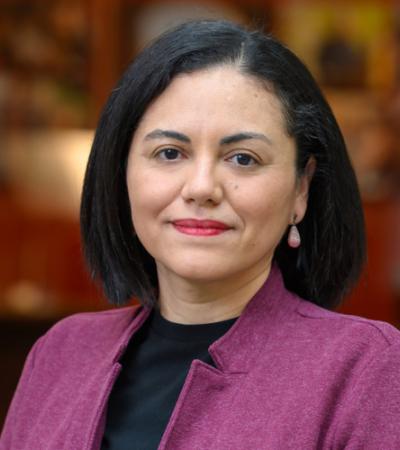

Rev. Rodrigo Zarazaga, SJ
Director, Centro de Investigacíon y Accíon Social (CIAS)
Kellogg Institute Visiting Fellow
University of Notre Dame
“Vote-Buying and Asymmetric Information”
Tuesday, November 13, 2012
12:30 pm - C103 Hesburgh Center
Abstract
Why are party machines often better electoral performers than their counterparts? This paper offers a model illustrating that the advantage of party machines over their counterparts stems from information asymmetries about voters' preferences. Specifically, party machines hold an informational advantage through their networks of the brokers used to distribute goods and services. Such parties can efficiently target voters in the face of uncertainty and win elections with higher probabilities than their counterparts. This model further accounts for why machine parties often target their own constituencies rather than attempting to win over swing voters. In-depth interviews with 120 brokers from Argentina provide evidence that is consistent with the model's interpretation of brokers behaving as price discriminators and giving clientelistic parties an electoral advantage.
Rodrigo Zarazaga, SJ (PhD, University of California, Berkeley) is the director of the Centro de Investigacíon y Accíon Social (CIAS), a Jesuit research and social welfare center in Buenos Aires. He will spend the fall semester developing a book manuscript, “Political Machines and Networks of Brokers,” which uses a case study of Argentina’s Peronist Party to attain new insights into how party machines operate.
Focusing on the role of brokers as well as other key relationships and strategies, Zarazaga will analyze differences in brokerage dynamics across Argentina. Using formal models that look at how brokers’ information and reputation influence clientelistic strategies such as vote buying, he will extend his project with a comparative analysis of cases from around the world. He contends that opposition parties could learn from the connections clientilistic parties have built with the poor, often by providing what the state has failed to provide.
Long involved in community development projects in his native Argentina, Zarazaga cofounded Protagonizar, a microcredit organization that promotes the social, economic, and cultural development of low-income citizens. Earlier publications include La pobreza de un país rico (Siglo XXI Editors, 2004).