ND Logo
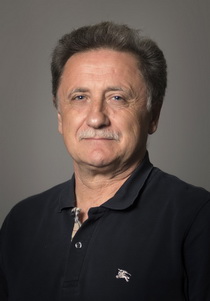
Alexander Mukasyan
Professor of Chemical Engineering
Director Manager
Laboratory of Advanced Electron Microscopy
ND-IIF
personal photo
Mailing
Address
Dept. Chemical and Biomiolecular Eng.
University of Notre Dame
Notre Dame, IN 46556
Office 2210 Stinson-Remick Hall
Phone (574) 631-9825
Fax (574) 631-8366
E-Mail amoukasi@nd.edu


Research Interests | Education | Current Research Projects| Publications | EE80603


Research Interests

  • Combustion of Heterogeneous Systems
  • Synthesis of Advanced Nano Materials
  • Kinetics of Rapid High-Temperature Reactions
  • Catalysis

Education

MS, 1980
Moscow Physical Engineering Institute,
Moscow,Russia

PhD, 1986
Institute of Chemical Physics,
RAS, Russia

DSc, 1994
Institute of Structural Macrokinetics and Materials Science,
RAS, Russia


Current Research Projects

Research interests of Professor Mukasyan are in fundamental studies of mechanisms for rapid high-temperature heterogeneous reaction and in developing of novel approaches for materials synthesis.

The following fundamental topics are currently under investigation.

Combustion in Microgravity

(special presentation #1)

Combustion in variety of gasless heterogeneous reaction systems is typically characterized by high temperatures (2000-3500 K) and heating rates (up to 106K/s). These conditions generate liquids and gases, which are subject to gravity-driven flow. The removal of such gravitational effects is likely to provide increased control of the reaction front, with a consequent improvement in control of the process. Thus on the one hand, microgravity experiments (NASA Glenn Research Center, Cleveland, OH) lead to major advances in the understanding of fundamental aspects of the combustion wave. On the other hand, the specific features of microgravity environment allow one to produce unique combustion products, which cannot be obtained under terrestrial conditions.

Mechanisms of Heterogeneous Reaction Waves Propagation

(special presentation #2)

In these studies we address several important issues related to mechanisms of rapid high temperature heterogeneous reactions, both on the macro- and microscopic levels. They include studies on the microstructural features of combustion wave propagation in gasless systems, examined with time scale ?10-3 s and length scale 1-100 mm. For this purpose we have developed a novel technique of digital high-speed microscopic video recording (DHSMVR), which allows in-situ observation of rapid processes occurring at the microscopic level. This technique is applied to investigate high temperature reaction waves in a variety of reaction systems. Using this method, significantly new information about the microstructure of gasless combustion waves was obtained, and a new basis was created for understanding the mechanisms of fast chemical reactions in heterogeneous media.

Also several industries related projects involve:

Combustion Synthesis (CS) of Advanced Materials

The synthesis of materials using combustion phenomena is an advanced approach in powder metallurgy. The process is characterized by unique conditions involving high temperatures (up to 3,500 K), and short reaction times (on order of seconds). As a result, combustion methods offer several attractive advantages over conventional metallurgical processing and alloy development technologies. The foremost is that solely the heat of chemical reaction (instead of an external source) supplies the energy for the synthesis. Also, simple equipment, rather than energy-intensive high-temperature furnaces, is sufficient. Further, an attractive aspect of combustion process is its ability to produce materials of hih-purity, since the high temperatures purge the powders of any volatile impurities adsorbed or present in the reactants. Remarkably, the high temperature gradients, combined with rapid cooling rates in the combustion wave, may form metastable phases and unique microstructures not possible by conventional methods. In addition, this technique allows the synthesis of new alloy compositions conveniently, rapidly, and in relatively small amounts that permit rapid screening of material composition to enhance properties. Finally, the combustion method also permits scale-up, so that commercial quantities can be produced efficiently.

Currently we work on developing of two CS-based technologies, i.e. casting bio-alloys for direct production of orthopedic implants (special presentation #3) `and sintering of complex oxide membranes for solid fuel cell applications (special presentation #4) `.

Non-isothermal Kinetics

This problem is important because in a majority of chemical engineering processes, the reaction system should be preheated before it reaches isothermal conditions or it operates under conditions where temperature changes with time. Some qualitative results available in the literature indicate that temperature-time history of the reactants may influence the mechanisms of chemical reactions. Thus, it is critical to know: (i) to what extent does the behavior of the reaction system depend on heating rate; (ii) whether one can use kinetics obtained under isothermal conditions to describe the reaction occurring essentially non-isothermally.

High-Toughness Carbon-Carbon Composites

Current technology of carbon-carbon brake production involves several cycles of CVI/CVD processes to transform initially high porous carbon fiber substrate to dense materials (>1.7 g/cc). One of the disadvantages of this approach is a long manufacturing time (~120 days). Other way to obtain dense graphite material with the required friction properties is to sintered carbon mesophase. It was shown that in general mesocarbon can be rapidly (1-2 days) sintered into essentially fully dense materials under relatively low processing temperature (<1500 C). However the toughness of synthesized materials is far below critical and thus after few stops samples usually broke in a brittle failure mode. The >goal of the project is, based on fundamental studies of sintering mechanism and using different "reinforcement" approaches, to elaborate the "rapid" technology for processing of mesocarbon microbeads (MCMB) to high-toughness composite carbon-based materials.

Carbon Nano-Tubes (CNT)

Carbon nanotubes currently attract great attention owing to their unique characteristics, such as high strength, electrical conductivity, as well as special functional properties. For example, CNTs have high potential for use as hydrogen storage materials in the transportation sector, electrochemical hydrogen storage in electrodes of rechargeable batteries and fuel cells and field emission materials in display technology. Among other methods for CNT synthesis the floating catalyst (FC) approach, used in our laboratory, is most promising, because of its possibility for continuous production of pure CNTs, simple equipment, low reaction temperature and thus low cost. Currently we are working on identifying the mechanism of CNT synthesis, and more specifically on the influence of catalytic agent nature on the microstructure and properties of the synthesized nanotube.

Thin Dense Metal Films

Nanoscale grained dense thin metallic films are of great importance in a variety of scientific and technological fields including microelectronics, optical devices, catalysis, chemical and biological sensors. A number of techniques are used for synthesis of the films, such as atomic layer epitaxy, magnetron sputtering, chemical vapor deposition and electroless plating. The properties of the films depend significantly on the microstructure and thickness. However, the available synthesis techniques, while yielding different microstructure and thickness, do not permit a systematic variation of these parameters in order to optimize film properties. We have developed a novel approach to overcome this problem and synthesize thin (~1 mm) fully dense film with nanoscale grained microstructure. This technique is an unusual combination of two different phenomena: electroless plating and osmosis. Since this unique approach can be used for synthesis of nanograined thin metal films of any desired composition, it can be employed in a variety of applications.

See selected publications for more details regarding above noted directions (see also full list of publications`):


Recent Publications

Books

  • "Combustion Synthesis of Materials: Introduction to Structural Microkinetics", Rogachev A. and Mukasyan A., Fiz.-Mat. Lit., Moscow, 2012
  • "Solid Flame", Merzhanov A.G and Mukasyan A.S.,Torus Press, Nauka, Moscow, 2007, pp.280.
  • "Combustion of Heterogeneous Systems: Fundamentals and Applications for Material Synthesis", edited by Mukasyan A., Martirosyan K. Research Signpost Publisher, 2007, pp.234.

Chapter in Books

  • "Combustion Synthesis of Silicon Carbide", in a book: Properties and Applications of Silicon Carbide, ed. by: Prof. R. Gerhardt, INTECH, Vienna, Austria , 2011, ISBN 978-953-307-356-9, pp.389-409
  • "Combustion Synthesis of Intermetallic Compounds," in a book: Self-Propagating High-Temperature Synthesis of Materials, (A. Borisov, L. DeLuca and A. Merzhanov, Eds.), Taylor & Francis, New York, 2002, pp. 1-34 with A. Varma.
  • "Combustion Synthesis of Advanced Materials”, in ASM Handbook: Powder Metal Technologies and Applications, 1998, 7, pp..523-540 with A. Varma.

Invited Reviews

  • "Combustion of Heterogeneous Nano-Structured Systems",
    Combustion, Explosion and Shock Waves, 46 (3), 2010 pp. 243-266.
    with Alexander S. Rogachev
  • "Discrete Reaction Waves: Gasless Combustion of Solid Powder Mixtures",
    J. Progress in Combustion and Energy, 2008, 34(3) pp. 377-416
    with Alexander S. Rogachev
  • "Combustion Synthesis and Nanomaterails",
    Current Opinion in Solid State and Materails Science, 12, 2008, pp. 44–50
    with Singanahally T. Aruna
  • "Combustion Joining of Refractory Materials",
    International Journal of Self-Propagating High-Temperature Synthesis, 2007, Vol. 16, No. 3, pp. 154–168.
    with Jeremiah D. E. White.
  • "Influence of Gravity on Combustion Synthesis of Advanced Materials"
    AIAA Journal, 43(2), 2005, pp. 225-246,
    with Arvind Varma and Cheryl Lau.
  • "Combustion Synthesis of Advanced Materials: Principles and Applications"
    Advances in Chemical Engineering, 1998, 24, pgs.79-226
    with Arvind Varma, Alexander S. Rogachev and Steven Hwang.

Selected Recent Publications

A.Rogachev A,, Vadchenko S., .Mukasyan A., “Self-sustained waves of exothermic dissolution in reactive multilayer nanofoils”, Appl. Phys. Lett. 101, 063119 (2012)

Hannora, A. Mukasyan, A. Mansurov, Z., “ Nanocrystalline Hydroxyapatite/Si Coating by Mechanical Activation Technique”, Bioinorganic Chemistry and Applications, Volume 2012, Article Number 390104, 14 pages (2012).

Lin, Ya-C., Ruiz E.M.,, Rateick R.G., McGinn P.J., Mukasyan A.S., “One-step synthesis of a multi-functional anti-oxidation protective layer on the surface of carbon/carbon composites”, Carbon, 50(2) 557-565 (2012).

Kumar, A.Wolf E.E., Mukasyan A.S., “Solution combustion synthesis of metal nanopowders: Copper and copper/nickel alloys”, AIChE J., 57(12) 3473- 3479 (2011).

Kumar, A.Wolf E.E., Mukasyan A.S., “Solution combustion synthesis of metal nanopowders: Nickel—Reaction pathways”, AIChE J., 57(8), 2207-2214 (2011).

Lennon E.M. , Tanzy M.C. , Volpert V.A. , Mukasyan A.S., Bayliss A., “Combustion of reactive solutions impregnated into a cellulose carrier: Modeling of two combustion fronts”, Chem. Eng. Journal, 174 (1) 333-340 (2011).

Mukasyan, A.S., Khina B.B., Reeves R.V.,, Son S.F.,, “Mechanical activation and gasless explosion: Nanostructural aspects”, Chem. Eng. Journal, 174 (2-3) 677-686 (2011).

Kumar, A., Mukasyan A.S. and E. E. Wolf Combustion synthesis of Ni, Fe and Cu multi-component catalysts for hydrogen production from ethanol reforming Applied Catalysis A: General, 401(1-2), 20-28 (2011).

Reeves, R.V., Mukasyan A.S. and Son S.F. “Thermal and Impact Reaction Initiation in Al-Ni Heterogeneous System”, J. Phys. Chem. C,, 114, 35 14772-14780 (2010).

Kumar, A., Mukasyan A.S. and E. E. Wolf, ” Modeling Impregnated layer Combustion Synthesis of Catalysts for Hydrogen Generation from Oxidative Reforming of Methanol”, Industrial & Engineering Chemistry Research, 49, 21, 11001-11008 (2010).

Ermekova, Z.S., Mansurov, Z.A., Mukasyan A.S., “Influence of Precursor Morphology on the Microstructure of Silicon Carbide Nanopowder produced by Combustion Syntheses”, Ceramics International, 36 (8) 2297-2305 (2010).

Shteinbertg, A.S., Lin, Ya-C., Son, S.F. and Mukasyan A.S., “Kinetics of High Temperature Reaction in Ni-Al System: Influence of Mechanical Activation”, J. Phys. Chem. A , 114, 6111–6116 (2010).

Ermekova, Z.S., Mansurov, Z.A., Mukasyan A.S., “Combustion Synthesis of Silicon Nano- Powders”, International Journal of SHS, 19 (2), 96-103 (2010).

Kumar, A., Mukasyan A.S. and E. E. Wolf “ Impregnated Layer Combustion Synthesis Method for Preparation of Complex Oxide Catalysts for Oxidative Reforming of Methanol” Applied Catalysis A: General, 372(2), 175–183 (2010).

Mukasyan A.S., J. D.E. White, D.Y. Kovalev, N. A. Kochetov, V. I. Ponomarev, S. F. Son, “Dynamics of Phase Transformation During Thermal Explosion in the Al-Ni System: Influence of Mechanical Activation “ Physica B-Condesnsed Matter., 405, 778–784 (2010).

Reeves R., J. D.E. White, E. M. Dufresne, K. Fezzaa, S. F. Son, A. Varma, and A. S. Mukasyan, Microstructural Transformations and Kinetics of High-temperature Heterogeneous Gasless Reactions by High-speed X-ray Phase-Contrast Imaging”, Physical Review B., 80, 224103 (2009).

White J.D.E, Reeves R. V., Son S. F., Mukasyan A.S., ”Thermal Explosion in Al-Ni System: Influence of Mechanical Activation”, J. Phys. Chem., A, 113, 13541–13547 (2009).

White J.D.E, Mukasyan A.S., “Electrically induced liquid infiltration for the synthesis of carbon/carbon-silicon carbide composite”, Ceramics International, 35, 3291–3299 (2009).

Schuyten, S., Dinka, P., Mukasyan A.S. and E. Wolf, 2008, "A Novel Combustion Synthesis Preparation of CuO/ZnO/ZrO2/Pd for Oxidative Hydrogen Production from Methanol", Catalysis Letters, 121(3-4) 189-198.

White, J.D.E. , Simpson A.H.,Shteinberg A.S. and Mukasyan A.S., 2008, "Combustion Joining of Refractory Materials: Carbon-Carbon Composites", J. Mat. Res., 23 `(1) 160-169.

Lan AD, Mukasyan A.S.,"Complex SrRuO3-Pt and LaRuO3-Pt Catalysts for Direct Alcohol Fuel Cells" 2008, Ind. & Eng. Chem. Res. 47(23), 8989-8994.

Mukasyan, A.S, Dinka, P., "Novel Method for Synthesis of Nano-Materails: Combustion of Active Impregnated Layer", 2007, J. Adv. Eng.Mater., 9, 653-657.

Deshpande K., Mukasyan A.S. and Varma A., 2006,"High-throughput Evaluation of the Perovskite-based Catalysts for Direct Methanol Fuel Cells," J. Power Sources, 158`(1), 60-68.

Fan Yue-Ying, Kaufmann, A., Mukasyan A.S. and Varma A., 2006, "Single and Multi-Wall Carbon Nanotubes Produced Using the Floating Catalyst Method: Synthesis, Purification and Hydrogen-uptake",Carbon, 44`(11), 2160-2170.

Dinka P. and Mukasyan A.,2005, "In Situ Preparation of the Supported Catalysts by Solution Combustion Synthesis", J. Phys. Chem. 109`(46), 21627-21633.

Lan, A. and Mukasyan, A, J.2005, "Hydrogen Storage Capacity Characterization of Carbon Nanotubes by Micro-Gravimetrical Approach", J. Phys. Chem, 109 `(33), 16011-16016.

Mukasyan, A.S.,"Combustion synthesis of Nitrides: Mechanistic Studies",2005,  Proceed, Combust. Inst.30, `2529-2535.

Kharatyan, S.L., Chatilyan, H.A., A. S. Mukasyan, D. A. Simonetti and A. Varma, 2005, "Influence of Heating Rate on Kinetics of Rapid High-Temperature Reactions in Condensed Heterogeneous Media: Mo-Si System", AIChE J, 51, `(1) 261-270.

Deshpande K., Mukasyan A.S. and Varma A.,2004, "Direct Synthesis of Iron Oxide Nanopowders by Combustion Approach: Reaction Mechanism and Properties", Chem. Mater. 16 (24), 4896-4904.

Shafirovich, E Mukasyan, A. Thiers, L. Varma, A. Legrand, C. Chauveau et I. Gokalp,2004, "Allumage et Combustion de Particules d'Aluminium Recouvertes de Nickel",Combustion, 2 (4), 275-293.

C. Norfolk, Mukasyan, A.S. Hayes D., McGinn P., and Varma A., 2003 "Processing of Mesocarbon Microbeads to High-Performance Materials: Part I. Studies Toward the Sintering Mechanism. Carbon, 42 (1), 11-19.

B. Li, A.S. Mukasyan, and A. Varma, 2003, Combustion Synthesis of CoCrMo (F-75) Implant Alloys: Microstructure and Properties", Mater. Res. Inov, 7 (4) 245-252.

A. Varma, Mukasyan A. S, Deshpande K., Pranda P., Erii, P., 2003, Combustion Synthesis of Nanoscale Oxide Powders: Mechanism, Characterization and Properties, Mat. Res. Soc. Symp. Proc. Vol. 800, 113-124.

C. Lau, Mukasyan A.S. and A. Varma, 2002, "Materials Synthesis by Reduction-Type Combustion Reaction: Influence of Gravity, Proceedings Combustion Institute, 29, 1101-1108.

A. Varma, "K. L. Yeung, R. Souleimanova and A.S. Mukasyan, 2002, Novel Approach for Thin Dense Nanoscale Grained Metal Films, Ind. & Eng. Chem. Res., 41 (25), 6323-6325.

A. Varma, A., Li, B. and A. Mukasyan, 2002, Novel Synthesis of Orthopaedic Implant Materials, J. Adv. Eng." Mater., 4, (7), 482-487.

A.S. Mukasyan, C. Lau and A. Varma. 2001. Gasless Combustion of Aluminum Particles Clad by Nickel. Combust. Sci. Tech., 170:67-85.

I.A. Filimonov, Ni.I. Kidin. and A.S. Mukasyan. 2001. The Influence of Filtration and Reactant Gas Pressure on Spin Combustion in Gas-Solid System. Int. J. SHS, 10:151-176.

C. Lau, A.S. Mukasyan, A. Pelekh and A. Varma. 2001. Combustion Synthesis of NiAl-based Composite: Effects of Microgravity. J. Mat. Sci. Res. 16:1614-1625.

A. S. Mukasyan, C. Costello, K.P. Sherlock, D. Lafarga and A.Varma. 2001. Perovskite Membranes by Aqueous Combustion Synthesis: Synthesis and Properties. Sep. & Purif. Tech., 25:117-126.

R. Souleimanova, R., A.S. Mukasyan and A. Varma. 2000. Effects of Osmosis on Microstructure of Pd-Composite Membranes Synthesized by Electroless Plating Technique. J. Memb. Sci., 166:249-257.

A.S. Mukasyan, A.S. Rogachev and A. Varma. 2000. Microstructural Mechanism of Combustion in Heterogeneous Reaction Media. Proceed. Combustion Institute, 28:1413-1419.

A. Pelekh, A.S. Mukasyan and A. Varma. 2000, Electrothermography apparatus for kinetics of rapid high-temperature reactions", Rev. Sic. Instrum.,71:220-223

L. Thiers, B. Leitenberger, A.S. Mukasyan and A. Varma. 2000. Influence of Preheating Rate on Kinetics of High-Temperature Gas-Solid Reactions", AIChE Journal, 46:2518-2524.

A.S. Mukasyan, A.S. Rogachev and A. Varma. 1999. Mechanism of Reaction Wave Propagation during Combustion Synthesis of Advanced Materials. Chem. Eng. Sci., 54:3357-3367.

A.S. Mukasyan, A.S. Rogachev and A. Varma. 1999. Microscopic Mechanisms of Pulsating Combustion in Gasless Systems. AIChE Journal, 45:2580-2585.

A. Varma, A.S. Rogachev, A.S. Mukasyan and S. Hwang. 1998.Complex Behavior of Self-Propagated Reaction Waves in Heterogeneous Media. Proc. Natl. Acad. Sci. USA, 95:11053-11058.

Lan, A. and Mukasyan, A. 2007, "Perovskite-based catalysts for direct methanol fuel cells', J. Phys. Chem, 26, 9573-9582.

 Mukasyan, AS., P.Epstein and P.Dinka, 2007, "Solution combustion synthesis of nanomaterials", Proc. Combustion Institute, 31(2), 1789-1795.

White J., Mukasyan A, La Forest M., and Simpson A.,2007, "Novel apparatus for joining of carbon-carbon composites", Review of Scientific Instruments, 78, 1.

Dinka P. and Mukasyan A.,2007, "Perovskite Catalysts for the Auto-reforming of Sulfur Containing Fuels", J. Power Sources, 167, 472-482.

A. Varma, and A. S. Mukasyan, A. 2004, Combustion Synthesis of Advanced Materials: Fundamentals and Applications, Korean J. Chem. Eng., 21 (2), 527-536.