"Welcome to The Prashant Kamat lab at the University of Notre Dame! With the help of internal and external collaborations we have established a successful multidisciplinary research program in nanostructure architectures and energy conversion processes." - Prashant Kamat
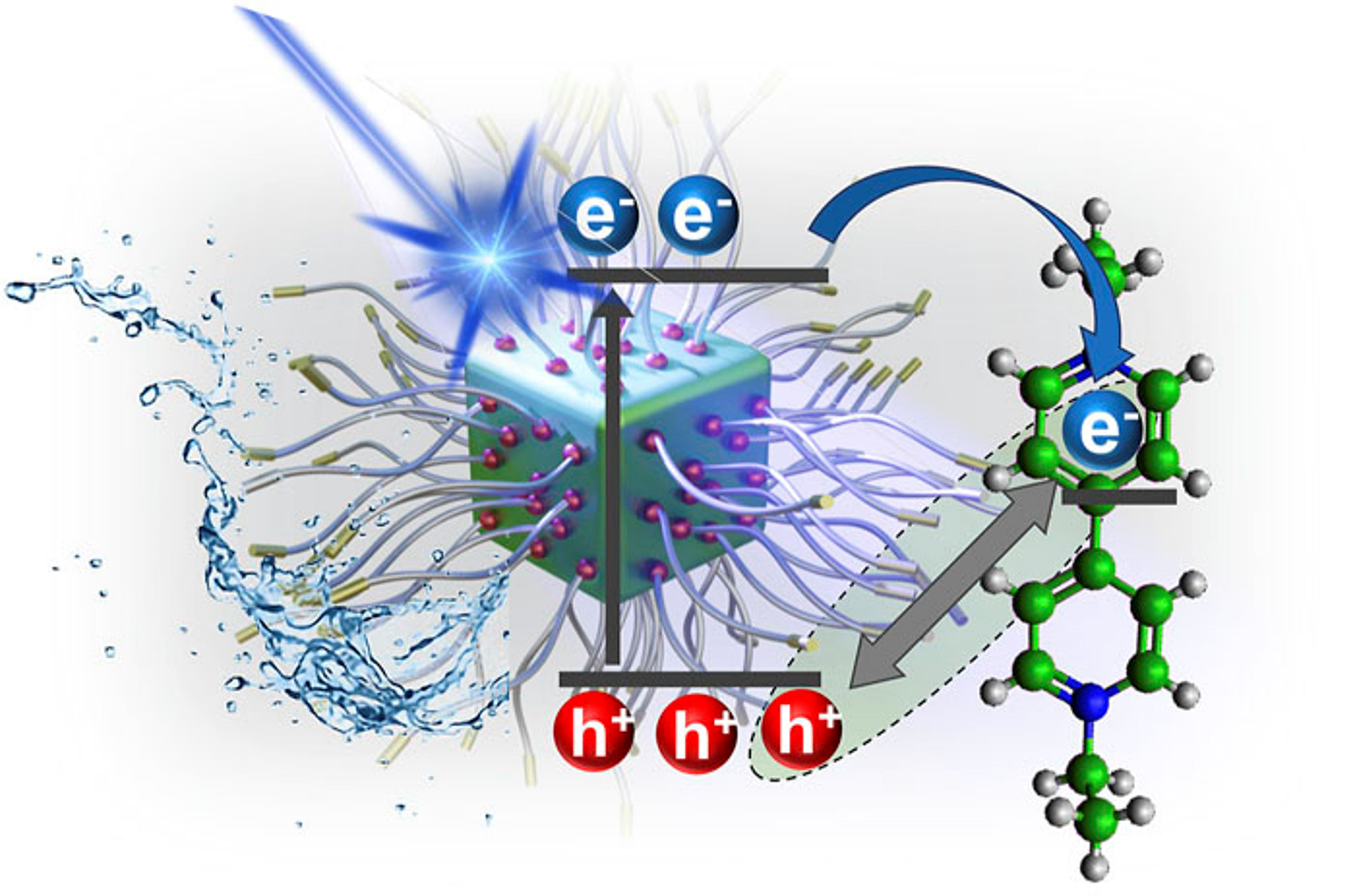
Abstract: Control of forward and back electron transfer processes in semiconductor nanocrystals is important to maximize charge separation for photocatalytic reduction/oxidation processes. By employing methyl viologen as the electron acceptor, we have succeeded in mapping the electron transfer from excited CsPbI3 nanocrystals to viologen as well as the hole trapping process. The electron transfer to viologen is an ultrafast process (ket = 2 × 10¹⁰ s-1) and results in the formation of extended charge separation as electrons are trapped at surface-bound viologen sites and holes at iodide sites. The I2─• formation, which is confirmed through the transient absorption at 750 nm, provides a convenient way to probe trapped holes and its participation in the back electron transfer process. By employing a series of mixed halide compositions, we were able to tune the bandgap and valence band energy of the perovskite donor. The back electron transfer rate constant (kbet = 1.3–2.6 × 10⁷ s-1) is nearly three orders of magnitude smaller than that of forward electron transfer, thus extending the lifetime of the charge-separated state. The weak dependence of the back electron transfer rate constant on the valence band energy suggests that trapping of holes at halide (I or Br) sites is involved in the back electron transfer process. The ability to extend the lifetime of the charge-separated pair can offer new strategies to improve the redox properties of semiconductor-based photocatalytic systems.
February 14, 2025Posted by Gábor Szabó
Akshaya and Sara have been awarded fellowships from ND Energy - Congratulations!
Akshaya has been awarded the 2025 Forgash Fellowship for Solar Energy Research for her project entitled: Electron Extraction from Upconverted Photons for Enhanced Solar Energy Conversion.
Sara has been awarded the 2025 Vincent P. Slatt Fellowship for Undergraduate Research in Energy Systems and Processes for her project entitled: Upconversion of Solar Energy: Triplet-Triplet Annihilation Upconversion from FAMAPbI3 to TiO2.
Congratulations!!!
March 28, 2024Posted by Gábor Szabó
Undergraduate student Sara Murray has been awarded a fellowship from ND Energy - Congratulations!
Sara has been awarded the 2024 Vincent P. Slatt Fellowship for Undergraduate Research in Energy Systems and Processes for her project entitled: Energy Transfer in Manganese doped CsPbCl3 Quantum Dots.
Congratulations, Sara!
March. 22, 2024Posted by Gábor Szabó
Professor Kamat has received the Henry H. Storch Award in Energy Chemistry - Congratulations!
Professor Kamat has received the Henry H. Storch Award in Energy Chemistry at the ACS Spring 2024 meeting!
The award is given annually to an individual who has made an outstanding contribution or contributions to fundamental or engineering energy related research and development and education that address the world's energy and chemical challenges. Areas of interest include: hydrocarbon fuels, energy storage, renewable energy sources, and production of energy via such methods as fuel cells and solar photovoltaics. Congratulations, Professor Kamat!
Jan. 30, 2024Posted by Gábor Szabó
Gábor has been awarded a fellowship from ND Energy - Congratulations!
Gábor has been awarded The Patrick and Jana Eilers Graduate Student Fellowship for Energy Related Research for his project entitled: Revealing the Role of Iodine Expulsion in Perovskite Solar Cells. You can read about it **here**.
Jan. 25, 2024Posted by Gábor Szabó
Akshaya published his first paper in the Kamat Lab! Congrats Akshaya!
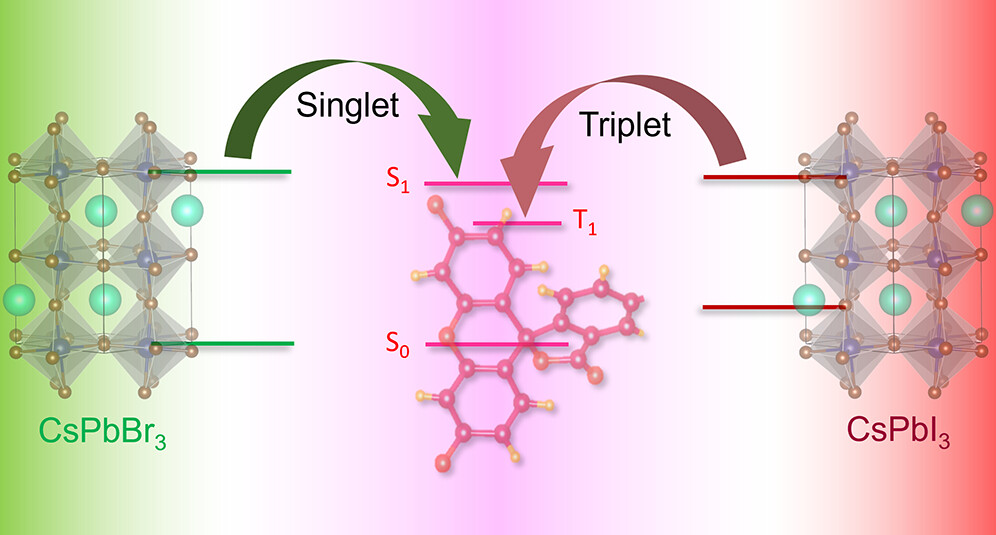
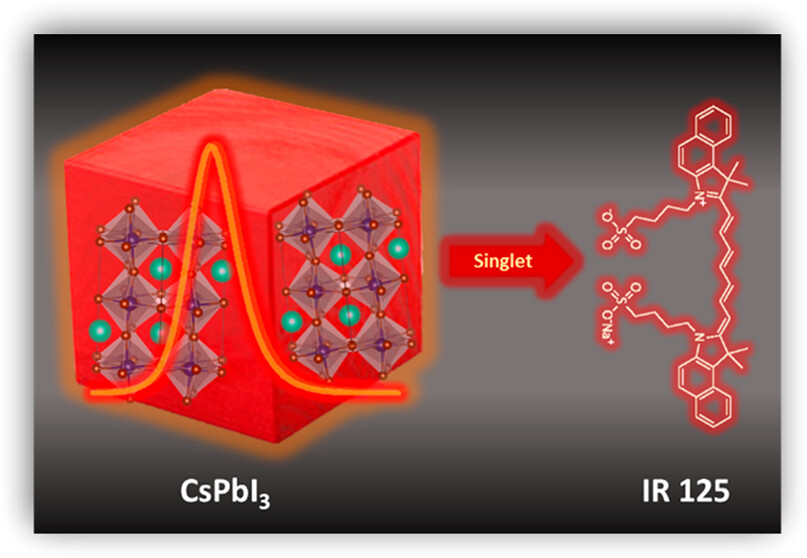
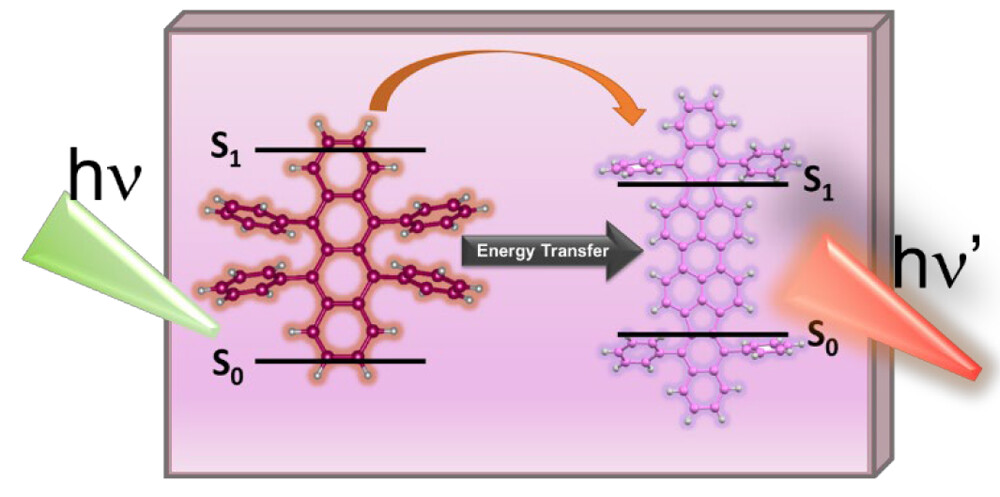
Abstract: Lead halide perovskite nanocrystals, which offer rich photochemistry, have the potential to capture photons over a wide range of the visible and infrared spectrum for photocatalytic, optoelectronic, and photon conversion applications. Energy transfer from the perovskite nanocrystal to an acceptor dye in the form of a triplet or singlet state offers additional opportunities to tune the properties of the semiconductor–dye hybrid and extend excited-state lifetimes. We have now successfully established the key factors that dictate triplet energy transfer between excited CsPbI3 and surface-bound rhodamine dyes using absorption and emission spectroscopies. The pendant groups on the acceptor dyes influence surface binding to the nanocrystals, which in turn dictate the energy transfer kinetics, as well as the efficiency of energy transfer. Of the three rhodamine dyes investigated (rhodamine B, rhodamine B isothiocyanate, and rose Bengal), the CsPbI3–rose Bengal hybrid with the strongest binding showed the highest triplet energy transfer efficiency (96%) with a rate constant of 1 × 10⁹ s-1. This triplet energy transfer rate constant is nearly 2 orders of magnitude slower than the singlet energy transfer observed for the pure-bromide CsPbBr3–rose Bengal hybrid (1.1 × 10¹¹ s-1). Intriguingly, although the single-halide CsPbBr3 and CsPbI3 nanocrystals selectively populate singlet and triplet excited states of rose Bengal, respectively, the mixed halide perovskites were able to generate a mixture of both singlet and triplet excited states. By tuning the bromide/iodide ratio and thus bandgap energy in CsPb(Br1-xIx)3 compositions, the percentage of singlets vs triplets delivered to the acceptor dye was systematically tuned from 0 to 100%. The excited-state properties of halide perovskite-molecular hybrids discussed here provide new ways to modulate singlet and triplet energy transfer in semiconductor–molecular dye hybrids through acceptor functionalization and donor bandgap engineering.
Dec. 28, 2023Posted by Gábor Szabó
Gábor published his first paper in the Kamat Lab! Congrats Gábor!
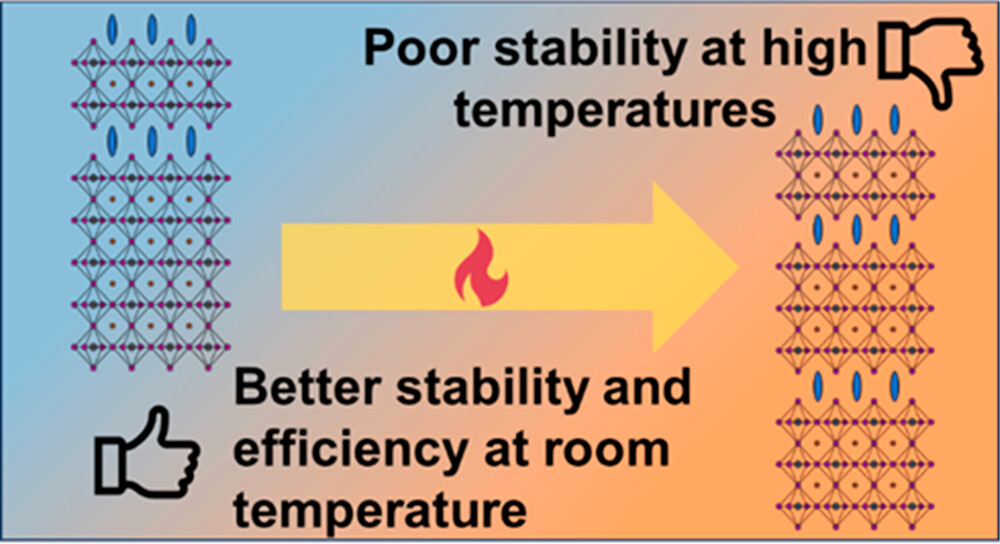
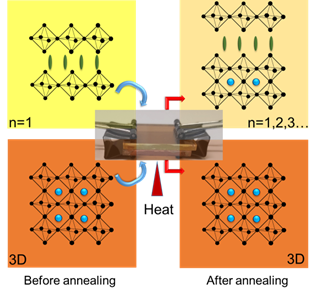
Abstract: Perovskite solar cells with 2D/3D architecture are claimed to exhibit better stability compared to pristine 3D films at room temperature. However, under illumination and/or heat, cation migration causes the exchange of the bulky spacer cations (2D phase) with the smaller A-site cations (3D phase), creating a gradient heterostructure at the 2D/3D interface. We have evaluated the performance of BA2MAPb2I7/MAPbI3 (2D/3D) and MAPbI3 (3D) solar cells at different temperatures, while simultaneously probing the absorption changes of the 2D/3D perovskite layer and the photovoltaic performance of solar cell devices. The 2D/3D solar cells were more stable at room temperature but exhibited deterioration of photovoltaic performance at high temperatures. By employing in situ measurements of operating solar cells to track both the photoconversion efficiency and absorption changes at different temperatures, we show that the cation exchange at the 2D/3D interface contributes to the efficiency losses.
Oct. 26, 2022Posted by Gábor Szabó
Jeff DuBose wins the Gerhard Closs Student Award from I-APS!
Jeff has been awarded the Gerhard Closs Student Award by the Inter-American Photochemical Society! This award is given out to students for their outstanding contributions to the photochemical sciences. Congratulations, Jeff!
Sept. 3, 2022Posted by Gábor Szabó
We say goodbye to our recent graduate and postdoc, Jeff DuBose!
After slightly more than 5 very productive years, Jeff's time has come to an end at Notre Dame. By the time of posting this Dr. DuBose has already arrived in Pasadena. There he will be working as a postdoc at Caltech in Karthish Manthiram's lab. We wish you all the best for your new scientific adventures!
July 21, 2022Posted by Gábor Szabó
Bo-An published his first paper in the Kamat Lab! Congrats Bo-An.
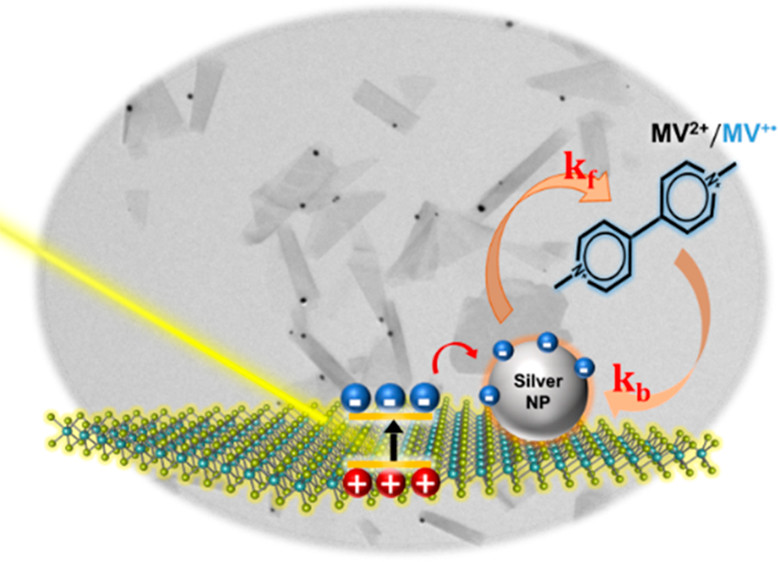
Abstract: Two-dimensional transition-metal dichalcogenides such as atomically thin MoS2 nanosheets are useful as low-cost solar energy conversion materials. Colloidally stable few-layer and monolayer MoS2 nanosheets in dimethylformamide were prepared via an electrochemically assisted liquid phase exfoliation approach. These nanosheets were further modified with Ag nanoparticles by using photocatalytic reduction of Ag+ ions. An MV2+/MV•+ redox couple was employed as a probe to determine the rate constants of photoinduced forward electron transfer (kf) and dark back electron transfer (kb) processes to establish the role of Ag cocatalyst in promoting photocatalytic reduction. The competition between these two processes dictates the buildup of a steady-state concentration of the reduction product (MV•+) under visible-light irradiation. The kf and kb rate constants increase with increasing Ag nanoparticle loading but with different dependencies, yielding a maximum reduction efficiency of 4.4%. At higher Ag loadings, the reduction yield decreases as back electron transfer dominates over the forward electron transfer process. Establishing the role of noble metal cocatalyst in the photoinduced charge transfer processes of Ag-MoS2 hybrid composites offers design strategies to maximize the photocatalytic performance of semiconductor–metal heterostructures.
May 14, 2022Posted by Jeff DuBose
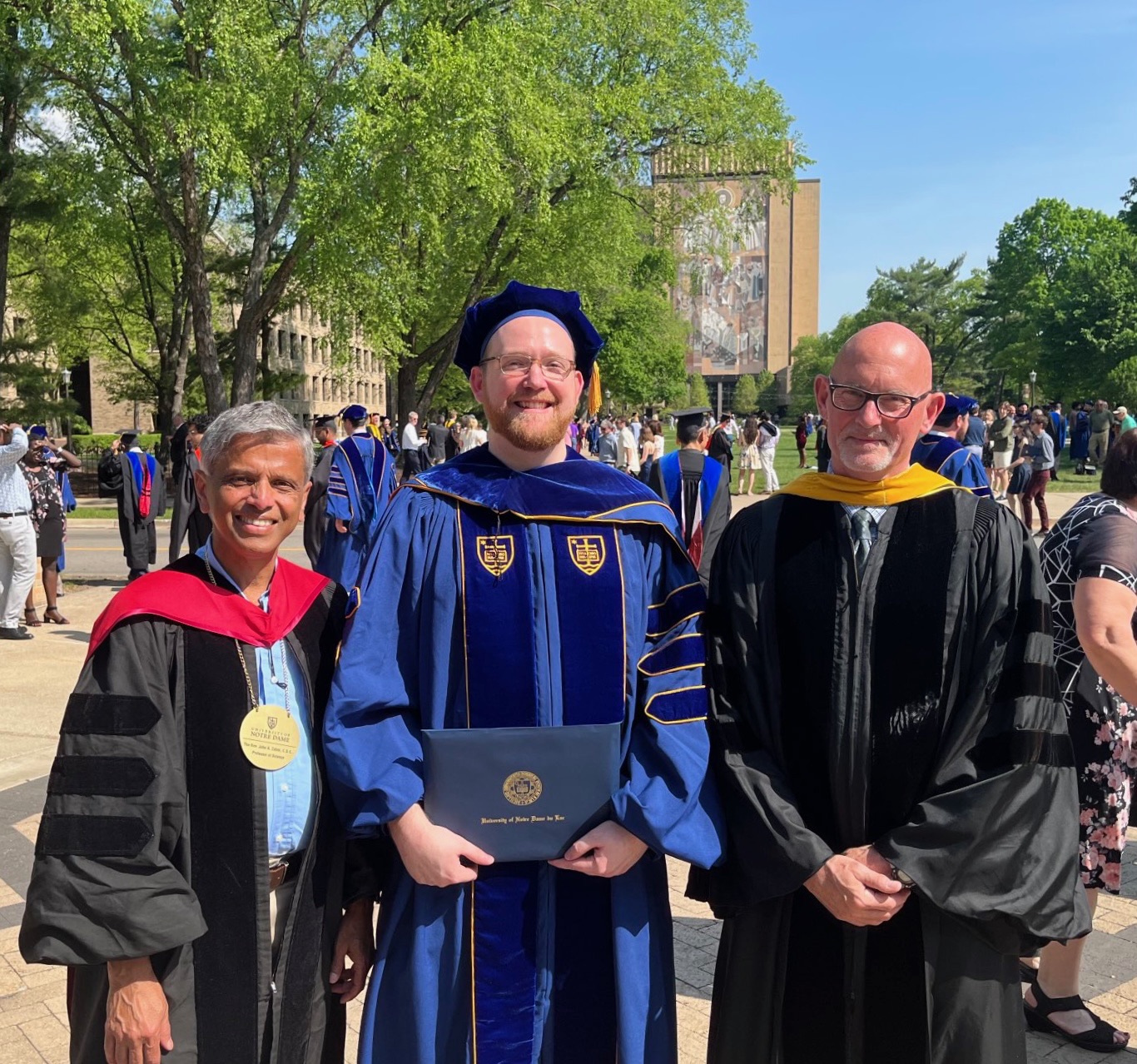
Jeff DuBose Graduates and Wins Dow Chemical Company Outstanding Graduate Student Award and Eli J. and Helen Shaheen Graduate School Award for Science!
After 5 wonderful years in the Kamat Lab, Jeff has graduated with his PhD! He will stay on as a postdoctoral fellow until the end of summer before heading to Caltech for a second postdoc.
He was also awarded the Dow Chemical Company Outstanding Graduate Student Award, and the Eli J. and Helen Shaheen Graduate School Award for Science. These awards are given out to a graduate student from the Department of Chemistry and College of Science, respectively, who demonstrates excellence in graduate research.
March 3, 2022Posted by Jeff DuBose
Anthony and Jishnu have been awarded fellowships from ND Energy - congratulations!
Congratulations to both!
Anthony has been awarded The Patrick and Jana Eilers Graduate Student Fellowship for Energy Related Research for his project entitled: Designing AgInS2-CdS Heterostructure with Improved Charge Separations. You can read about it **here**.
Jishnu has been awarded The Forgash Fellowship for Solar Energy Research for his project entitled: Interfacial Processes in Perovskite-Metal Hybrid Structure for Photocatalytic Applications. You can read about it **here**.
Dec. 14, 2021Posted by Jeff DuBose
We say goodbye to our visiting researcher, Federica Costantino.
Federica's time at Notre Dame has sadly come to an end and the lab will miss her. Soon she will defend her PhD soon and become Dr. Costantino! Congratulations in advance, and well done with a productive visit to Notre Dame. We wish you all the best!
Dec. 14, 2021Posted by Jeff DuBose
Anthony published his first paper in the Kamat Lab! Congrats Anthony.
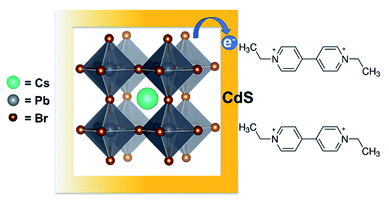
Abstract: The instability of cesium lead bromide (CsPbBr3) nanocrystals (NCs) in polar solvents has hampered their use in photocatalysis. We have now succeeded in synthesizing CsPbBr3–CdS heterostructures with improved stability and photocatalytic performance. While the CdS deposition provides solvent stability, the parent CsPbBr3 in the heterostructure harvests photons to generate charge carriers. This heterostructure exhibits longer emission lifetime (τave = 47 ns) than pristine CsPbBr3 (τave = 7 ns), indicating passivation of surface defects. We employed ethyl viologen (EV2+) as a probe molecule to elucidate excited state interactions and interfacial electron transfer of CsPbBr3–CdS NCs in toluene/ethanol mixed solvent. The electron transfer rate constant as obtained from transient absorption spectroscopy was 9.5 × 10¹⁰ s−1 and the quantum efficiency of ethyl viologen reduction (ΦEV+˙) was found to be 8.4% under visible light excitation. The Fermi level equilibration between CsPbBr3–CdS and EV2+/EV+˙ redox couple has allowed us to estimate the apparent conduction band energy of the heterostructure as −0.365 V vs. NHE. The insights into effective utilization of perovskite nanocrystals built around a quasi-type II heterostructures pave the way towards effective utilization in photocatalytic reduction and oxidation processes.
Oct. 7, 2021Posted by Jeff DuBose
Jeff won the Journal of Physical Chemistry & Experimental Subdivision of the Division of Physical Chemistry 2021 Award for Outstanding Graduate Research!
Jeff gave a talk on Directing Energy Transfer in Halide Perovskite-Chromophore Hybrid Assemblies at the Symposium on Friday, September 17 along with 8 other finalists.
You can read more about the award **here**.
Watch Jeff's symposium talk on Directing Energy Transfer in Halide Perovskite-Chromophore Hybrid Assemblies :
Aug. 27, 2021Posted by Jeff DuBose
Jishnu publihsed his first paper in the Kamat Lab! Congrats Jishnu.
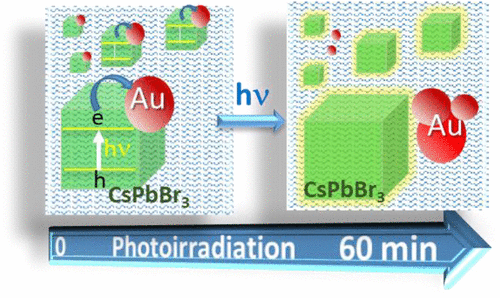
Abstract: Semiconductor–metal heterostructures such as CsPbBr3–Au are useful in photocatalysis. When Au nanoparticles are deposited on the CsPbBr3 nanocrystal surface, they efficiently quench the photoluminescence of the semiconductor. This process has been studied by femtosecond transient absorption spectroscopy measurements, which indicate that electron transfer to the Au nanoparticles occurs from both hot and relaxed electrons in the conduction band of CsPbBr3. The electron transfer rate constant is much larger for the hot electrons compared to the relaxed electrons. Under steady state photoirradiation of CsPbBr3–Au heterostructure, the photogenerated electrons from the excited CsPbBr3 nanocrystals continue to charge the Au nanoparticles. After sufficient irradiation, the gold nanoparticles dissociate from the CsPbBr3 surface and aggregate into larger size gold nanoparticles. The expulsion of gold nanoparticles restores the original luminescence behavior of CsPbBr3 nanocrystals. The spectroscopic and morphological studies provide insight into the expulsion of gold nanoparticles in photoirradiated CsPbBr3–Au heterostructures.
Feb. 21, 2021Posted by Jeff DuBose
Preethi and Jeff have been awarded fellowships from ND Energy - congratulations!
Congratulations to both!
Preethi has been awarded The Patrick and Jana Eilers Graduate Student Fellowship for Energy Related Research for her project entitled: Understanding the Effect of Crystallinity on Perovskite Stability. You can read about it **here**.
Jeff has been awarded The Forgash Fellowship for Solar Energy Research for his project entitled: Revealing the Role of Ionic Liquids in Stabilizing Perovskite Solar Cells. You can read about it **here**.
Feb. 21, 2021Posted by Jeff DuBose
Read our the new review article on halide ion migration in nanocrystals/nanostructures!
Halide Ion Migration in Perovskite Nanocrystals and Nanostructures
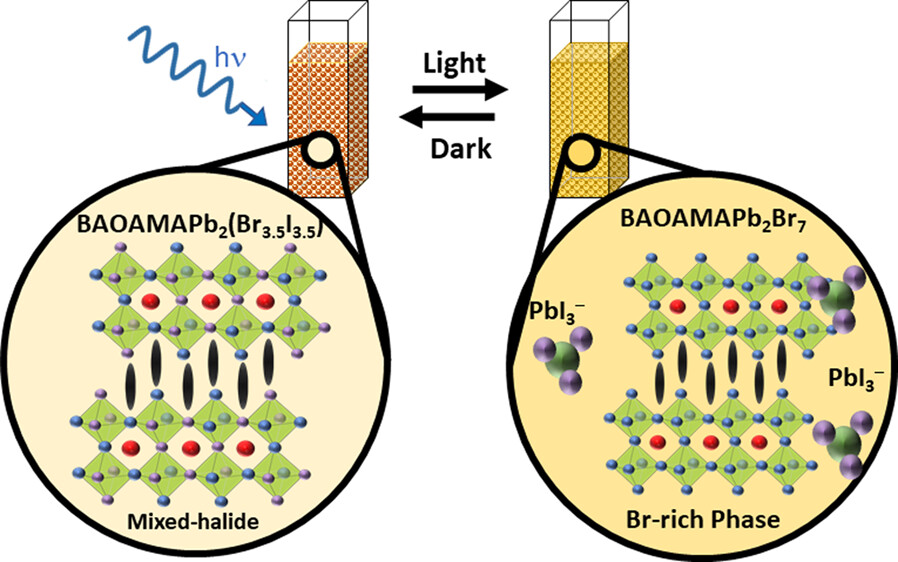
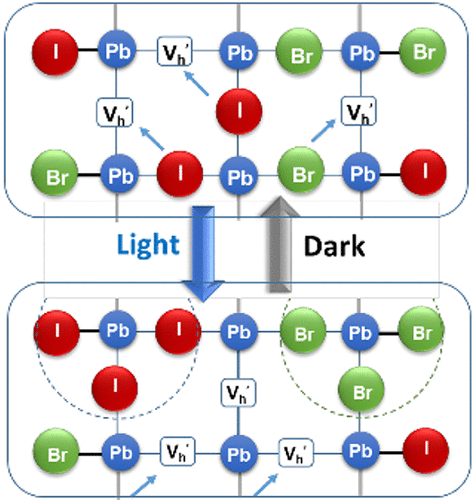
Abstract: The optical and electronic properties of metal halide perovskites provide insight into the operation of solar cells as well as their long-term operational stability. Halide mobility in perovskite films is an important factor influencing solar cell performance. One can visualize halide ion migration through halide exchange between two nanocrystal suspensions or between physically paired films of two different metal halide perovskites. The ability to tune band gap by varying halide ratios (Cl:Br or Br:I) allows the synthesis of mixed halide perovskites with tailored absorption and emission across the entire visible spectrum. Interestingly, mixed halide (e.g., MAPb(Br0.5I0.5)3) films undergo phase segregation to form Br-rich and I-rich sites under steady state illumination. Upon halting illumination, segregated phases mix to restore original mixed halide compositions. Introducing multiple cations (Cs, formamidinium) at the A site or alloying with Cl greatly suppresses halide mobilities. Long-term irradiation of MAPb(Br0.5I0.5)3 films also cause expulsion of iodide leaving behind Br-rich phases. Hole trapping at I-rich sites in MAPb(Br0.5I0.5)3 is considered to be an important step in inducing halide mobility in photoirradiated films. This Account focuses on halide ion migration in nanocrystals and nanostructured films driven by entropy of mixing in dark and phase segregation under light irradiation.
We say goodbye to our postdocs, Jun Cho and Manjeet Chhetri.
Dr. Junsang Cho and Dr. Manjeet Chhetri's time at Notre Dame has sadly come to an end, but they are off new opportunities! Jun will be starting a faculty position at Duksung Women's University in Seoul, and Manjeet will be doing a postdoc at Clemson. We wish them all the luck in their science adventures!
July 20, 2020Posted by Jeff DuBose
See the details on how triple halide perovskites suppress phase segregation!
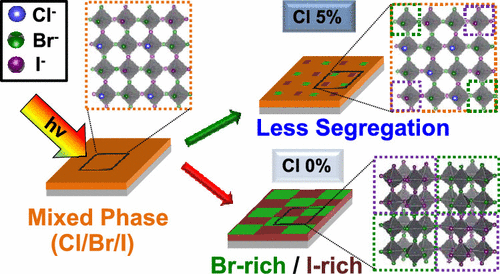
Abstract: Halide ion mobility in metal halide perovskites plays an important role in dictating the overall device performance and long-term stability of perovskite solar cells. Alloying with chloride (Cl), which is known to stabilize the perovskite solar cells, has now been found to suppress the photoinduced halide ion segregation in mixed halide (Br/I) perovskites. By varying the chloride concentration of 1–10% (as part of the halide composition), we have probed both photoinduced segregation and dark recovery kinetics at different temperatures. When we increased the concentration of Cl from 0 to 5%, we observed a decrease in the rate constant of segregation by a factor of ∼5 and a decrease in the fraction of halide segregation from 45 to 20%. The activation energy for photoinduced halide segregation increases (∼4 kJ/mol) upon the introduction of chloride into the mixed halide film, reflecting an increased energetic barrier for halide ion migration.
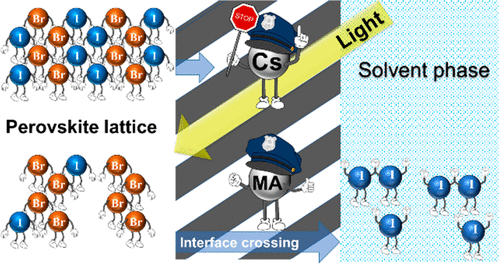
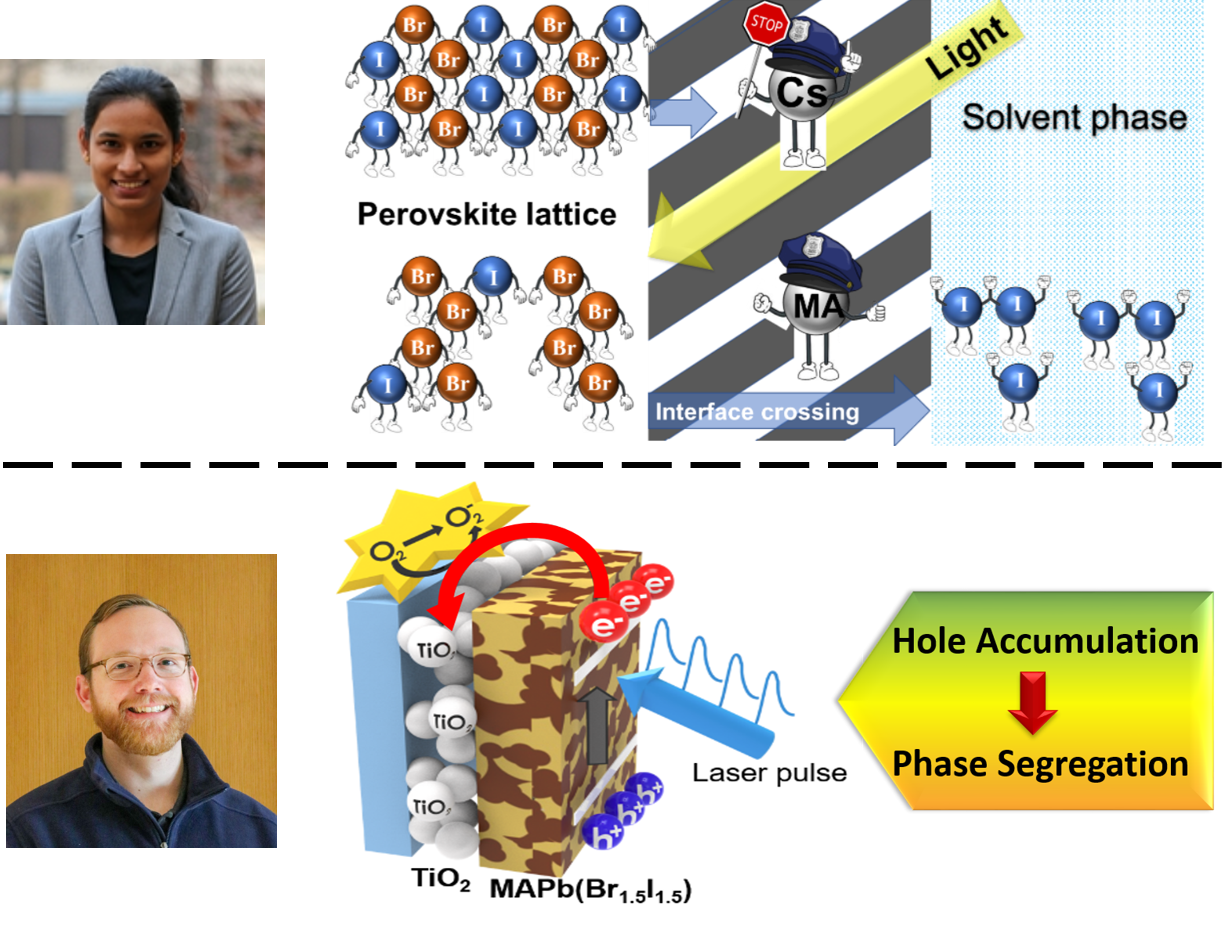
Abstract: Visible light irradiation of a mixed halide perovskite film in contact with a solvent (dichloromethane, DCM) in which the film otherwise is stable leads to selective expulsion of iodide (I) from the film with a concurrent shift in the band edge to lower wavelengths. We have now employed mixed halide perovskites to uncover the influence of A-site cation [methylammonium (MA) and cesium (Cs)] on the mobility of iodide ions under photoirradiation. In the absence of solvent contact, the mixed halide perovskite films undergo photoinduced segregation with a rate constant that decreases with increasing Cs content. Interestingly, the iodide expulsion rate in DCM is strongly dependent on the rate of photoinduced segregation. At Cs atomic concentrations greater than 50%, the films become stable as the iodide expulsion is largely suppressed. The role of the A-site cation in dictating the mobility of halide ions is discussed.
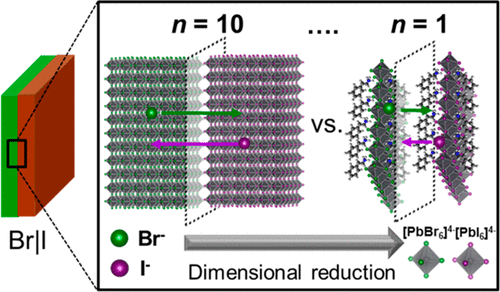
Abstract: Two-dimensional (2D) lead halide perovskites represent an emerging class of materials given their tunable optoelectronic properties and long-term stability in perovskite solar cells. In order to assess the halide ion mobility, we have tracked the changes in the bromide and iodide composition in physically paired 2D lead halide perovskite films of different layer numbers (n = 10–1). These low-dimensional perovskites suppressed halide ion migration as a result of their intercalated spacer ligands and their strong van der Waals interactions. The rate constants for halide exchange of low dimensionality perovskites follow the Arrhenius relationship with thermal activation energy ranging from 58 kJ/mol (n = 10) to 72 kJ/mol (n = 1). The suppression of halide ion mobility (and diffusion coefficient) with modulating perovskite layer number (n) provides further insight into the role of 2D perovskites in improving the performance of photovoltaic devices.
Abstract for Preethi's presentation: Visible light irradiation of the mixed halide perovskite film in contact with a solvent in which the film is otherwise stable leads to selective expulsion of iodide from the film with a concurrent shift in the band edge to lower wavelengths. Expulsion of iodide into solution can be tracked by the formation of I3- species in the solvent, allowing for calculation of a quantum yield for iodide expulsion process. In the absence of solvent contact the mixed halide perovskite films undergo photoinduced segregation. The rate of iodide expulsion in solvent is strongly dependent on the rate of photoinduced segregation.
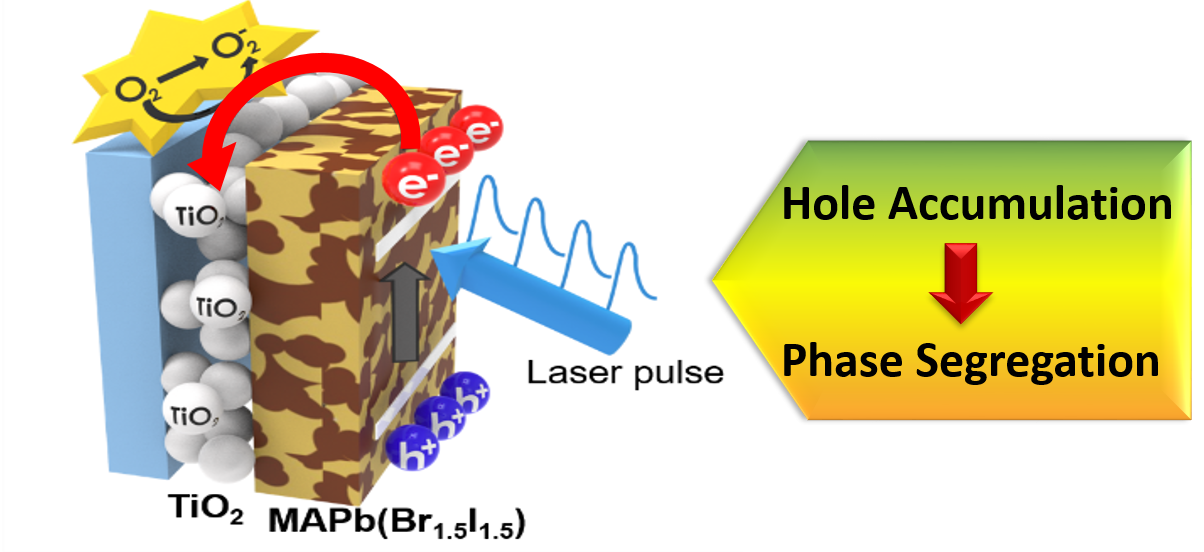
Abstract for Jeff's presentation: In metal halide perovskite solar cells, electron transport layers (ETLs) such as TiO2 dictate the overall photovoltaic performance. However, the same electron capture property of ETL indirectly impacts halide ion mobility as evident from the TiO2-assisted halide ion segregation in mixed halide perovskite (MHP) films under pulsed laser excitation (387 nm, 500 Hz). This segregation is only observed when deposited on an ETL such as TiO2 but not on insulating ZrO2 substrate. Injection of electrons from excited MHP into the ETL (ket = 1011 s–1) followed by scavenging of electrons by O2 causes hole accumulation in the MHP film. Localization of holes on the iodide site in the MHP induces instability causing iodide from the lattice to move away toward grain boundaries. Suppression of segregation occurs when holes are extracted by a hole transport layer (spiro-OMeTAD) deposited on the MHP, thus avoiding hole build-up. These results provide further insight into the role of holes in the phase segregation of MHPs and hole mobility in perovskite solar cells.
April 9, 2020Posted by Jeff DuBose
Read our the new review article on phase segregation in mixed halide perovskites!
Photoinduced Anion Segregation in Mixed Halide Perovskites
Abstract: Alloyed lead halide perovskites have taken a dominant role in the quest for third-generation solar cells. This is due to optimal light-harvesting properties, which can be tuned across the visible spectrum by mixing halide (X = Cl–, Br–, and I–) anions and A+ cations (A+ = FA+, MA+, and Cs+). Durability issues related to ion movement within the perovskite lattice, however, impede large-scale commercialization. Uniformly mixed halide perovskites [e.g., APb(I1–xBrx)3] reversibly segregate into narrow bandgap I-rich and wide bandgap Br-rich domains during continuous visible illumination. Subsequent I-rich domains reduce local open circuit voltages and decrease mixed halide perovskite solar cell power conversion efficiencies. In this review, we assess the known effects of halide segregation on the structural and optical properties of mixed halide materials, discuss ongoing research to suppress the phenomenon, and provide a mechanistic overview of its underlying origins.
Abstract: In metal halide perovskite solar cells, electron transport layers (ETLs) such as TiO2 dictate the overall photovoltaic performance. However, the same electron capture property of ETL indirectly impacts halide ion mobility as evident from the TiO2-assisted halide ion segregation in mixed halide perovskite (MHP) films under pulsed laser excitation (387 nm, 500 Hz). This segregation is only observed when deposited on an ETL such as TiO2 but not on insulating ZrO2 substrate. Injection of electrons from excited MHP into the ETL (ket = 1011 s–1) followed by scavenging of electrons by O2 causes hole accumulation in the MHP film. Localization of holes on the iodide site in the MHP induces instability causing iodide from the lattice to move away toward grain boundaries. Suppression of segregation occurs when holes are extracted by a hole transport layer (spiro-OMeTAD) deposited on the MHP, thus avoiding hole build-up. These results provide further insight into the role of holes in the phase segregation of MHPs and hole mobility in perovskite solar cells.
Abstract:
We celebrate the contribution of female energy
researchers who have published new advances from
their laboratories in ACS Energy Letters. In order to
inspire other scientists working in the field, we asked them to
comment on their inspiration to engage in energy research,
discuss an “aha” moment in research, and/or provide advice to
newcomers in the field. These personal stories, collected from
early career researchers to well-established senior scientists, span
the successful career paths they have taken to become leaders
in the community. It is our hope that these personal reflections
can motivate many young researchers to tackle challenges in
clean energy. In this two-part series, we compile papers
published by women researchers in ACS Energy Letters along
with their personal stories.
This virtual issue is a compilation of one representative paper
from each of these scientists. We would like to thank Stacey F.
Bent, Sharon Hammes-Schiffer, Shelley D. Minteer, Eline M.
Hutter, Aleksandra Vojvodic, Stephanie L. Wunder, Emily A.
Carter, Emily A. Weiss, Esther S. Takeuchi, Jennifer M. Pringle,
Anita W. Y. Ho-Baillie, R. Geetha Balakrishna, Annamaria
Petrozza, Christy F. Landes, Hemamala I. Karunadasa, Laura M.
Herz, and Lisa M. Utschig for their contributions to this virtual
issue.
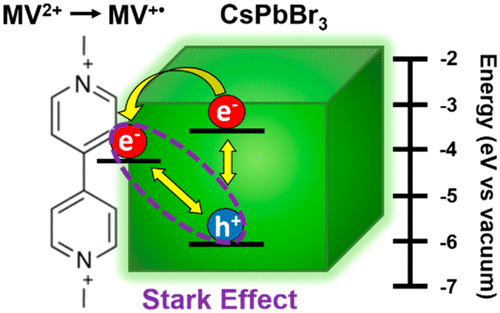
Abstract: The strong binding between CsPbBr3 nanocrystals and methyl viologen induces a long-lived charge-separated state following band gap excitation with important implications in photocatalytic processes. The unusually long-lived bleaching of the CsPbBr3 excitonic peak in this case arises from the creation of a dipole with the hole residing in CsPbBr3 and the electron in the surface-bound methyl viologen moiety.
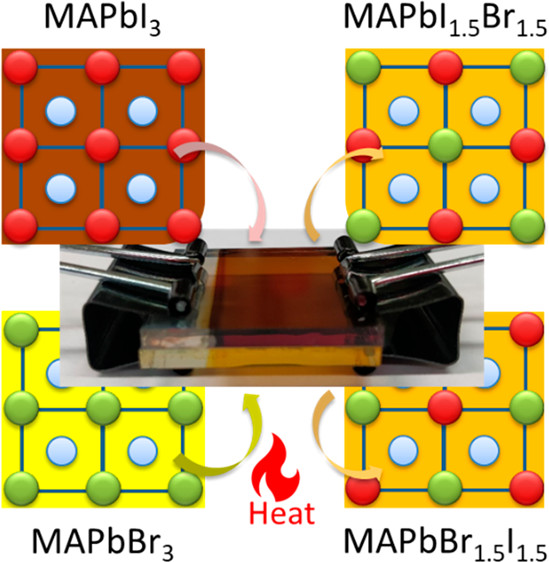
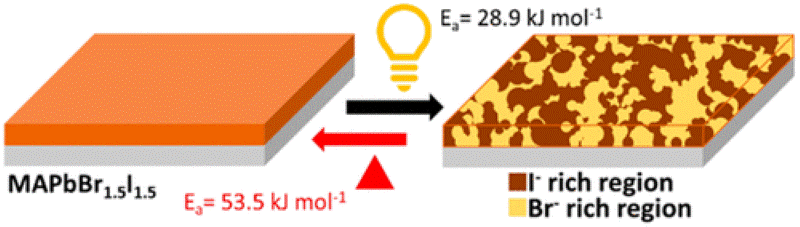
Abstract: The halide ion mobility in mixed halide perovskite exhibits two opposite trends in response to photo and thermal activation. While halides prefer to remain as Br-rich and I-rich domains under steady-state light irradiation of MAPbBr1.5I1.5 films, they prefer to remain in their stable mixed composition when kept in the dark. The activation energies as determined from the temperature-dependent rate constants are Ea,forward = 28.9 kJ mol–1 for photoinduced segregation and Ea,reverse = 53.5 kJ mol–1 for remixing of halides in the dark, respectively. The energy input from photoexcitation assists overcoming the dark (thermally activated) mixing to induce Br-rich and I-rich domains. This segregated state is maintained as long as the mixed halide film is irradiated continuously with visible light. The excitation intensity threshold above which segregation occurs follows a linear temperature dependence, such that phase separation occurs above Iexc = 30 μW/cm2 white light at 23 °C. The threshold at 90 °C becomes higher with a minimum intensity requirement of 100 μW/cm2 to induce segregation. The thermodynamic rationale behind this unusual halide mobility under photo and thermal excitation discussed here can aid in understanding the stability issues of perovskite solar cells.
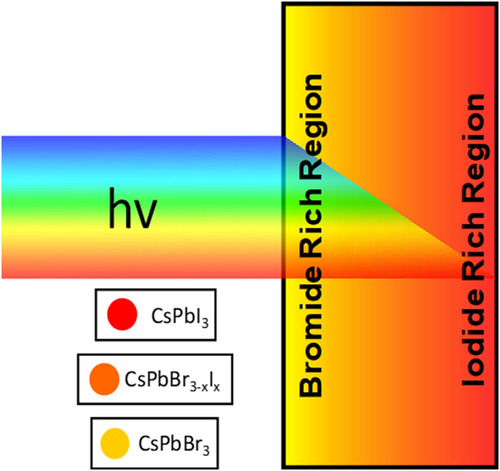
Abstract: Cesium lead halide perovskite films with a systematic change in the halide composition of CsPbBr3−xIx, in which iodide concentration varies from x = 0 to x = 3, provide a built-in gradient band structure. Such a gradient structure allows for the integrated capture of visible photons and directs them to the energetically low-lying iodide rich region. Annealing gradient halide perovskite films at temperatures ranging from 50 °C to 90 °C causes the films to homogenize into mixed halide perovskites. The movement of halide ions during the homogenization process was elucidated using UV-Visible absorbance and X-ray photoelectron spectroscopy. The halide ion movement in CsPbBr3−xIx gradient films was tracked via absorbance changes in the visible region of the spectrum that enabled us to measure the temperature dependent rate constant and energy of activation (74.5 kJ/mol) of halide ion homogenization. Excited state processes of both gradient and homogenized films probed through transient absorption spectroscopy showed the direct flow of charge carriers and charge recombination in both films.
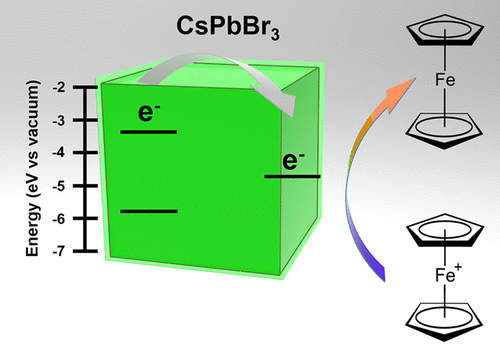
Abstract: Interfacial charge transfer between a semiconductor nanocrystal and a molecular relay is an important step in nanomaterial photocatalysis. The ferrocene redox couple (Fc+/Fc0, E0 = −4.9 eV vs vacuum) has now been used as a model redox relay system to investigate photocatalytic properties of CsPbBr3 perovskite nanocrystals. The photocatalytic reduction of ferrocenium (Fc+) to ferrocene (Fc0) with CsPbBr3 nanocrystals was dictated by the surface interactions. Whereas a rapid quenching and subsequent recovery of CsPbBr3 emission is seen at low Fc+ concentrations, the quenched emission was sustained at higher Fc+ concentrations. The photoinduced interfacial electron transfer between CsPbBr3 and ferrocenium (Fc+) studied using transient absorption spectroscopy occurred with a rate constant of 1.64 × 10¹⁰ s–1. Better understanding of interfacial processes using redox probes can lead to the improvement in photocatalytic performance of perovskite nanocrystals.
Undergraduate Researcher Jake Drysdale Gives Poster Presentation about his project: "Halide Composition and Temperature Dependent Properties of Perovskite Solar Cells"
Undergraduate researcher James Drysdale gives a video presentation for his poster entitled "Halide Composition and Temperature Dependent Properties of Perovskite Solar Cells" for the Notre Dame Summer Undergraduate Research Symposium.
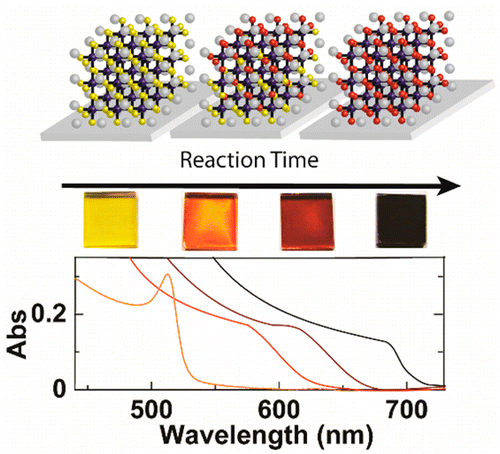
Abstract: MAPbBr3 and MAPbI3 films cast onto glass slides and physically paired together undergo halide exchange to form mixed halide films. The change in halide composition in these two ∼130 nm thick films occurs concurrently with Br– diffusing toward the MAPbI3 film and I– diffusing toward the MAPbBr3 film. The diffusion of these halide species, which is tracked through changes in the absorption, offers a direct measurement of thermally activated halide diffusion in perovskite films. The increase in the rate constant of halide diffusion with increasing temperature (from 8.3 × 10⁻⁶ s–1 at 23 °C to 3.7 × 10⁻⁴ s–1 at 140 °C) follows an Arrhenius relationship with activation energy of 51 kJ/mol. The thermally activated halide exchange shows the challenges of employing layers of different metal halide perovskites in stable tandem solar cells.
Come see what ND Energy has to say about associated researcher and Kamat Lab member Rebecca Scheidt
Rebecca Scheidt is entering her fourth year as a graduate student advised by Prof. Prashant Kamat in the Department of Chemistry and Biochemistry. She presented "Interfacial Charge Transfer between Excited CsPbBr3 Nanocrystals and TiO2: Charge Injection versus Photodegradation,” at the ND Energy PD&GS Luncheon in May. In 2018, Scheidt received the Patrick and Jana Eilers Graduate Student Fellowship for Energy Related Research for her project looking at cesium lead bromide perovskite nanocrystals and how they operate in a photovoltaic device stack. Because these next-generation materials absorb light so well, these nanocrystal solar cells can be placed into thin film and flexible technologies. “What I specifically look at is how they interacted with different charge transfer materials in the solar cell and whether that caused degradation under certain conditions,” Scheidt said. “In terms of making them more stable long-term, and looking at how they break down or degrade, we aim to make them more efficient overall.”
Click here to read the rest of the blurb from ND Energy
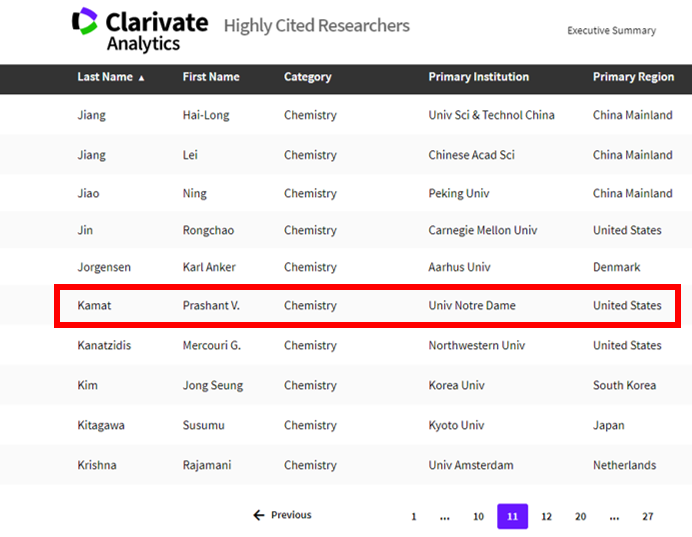
Dr. Kamat is recognized as one of the Clarivate Analytics' 2018 Highly Cited Researchers list! Congratulations, Dr. Kamat!
This list recognizes world-class researchers selected for their exceptional research performance, demonstrated by production of multiple highly cited papers that rank in the top 1% by citations for field and year in Web of Science. Click here for ND Energy's post about the Notre Dame Faculty who were awarded this prestigious honor.
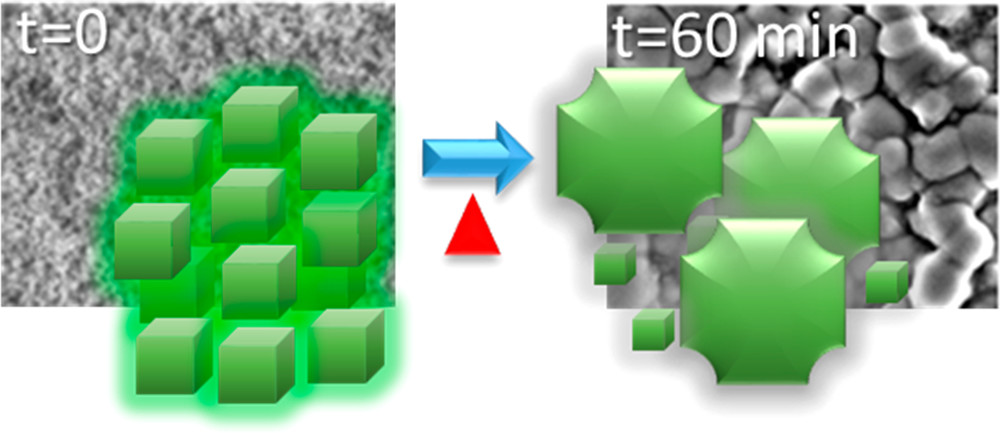
Abstract: The control of grain size and surface properties is an important parameter in controlling the optoelectronic and photovoltaic properties of metal halide perovskites. When CsPbBr3 nanocrystal (10 nm in diameter) films were annealed at 100–125 °C, they grow in size to produce 400 nm diameter crystallites while transforming into bulk perovskite films. Characteristic changes in the optical properties were noted when such transformation occurred from nanocrystals into bulk. By tracking absorbance and emission spectra and morphological changes of CsPbBr3 films at different annealing times and temperature, we were able to establish the mechanism of particle growth. The presence of nanocrystals and larger crystals during the intermediate annealing steps and narrowing size distribution confirmed the Ostwald ripening mechanism for the crystal growth. The energy of activation of crystal growth as determined from the temperature dependent optical properties was estimated to be 75 kcal/mol.
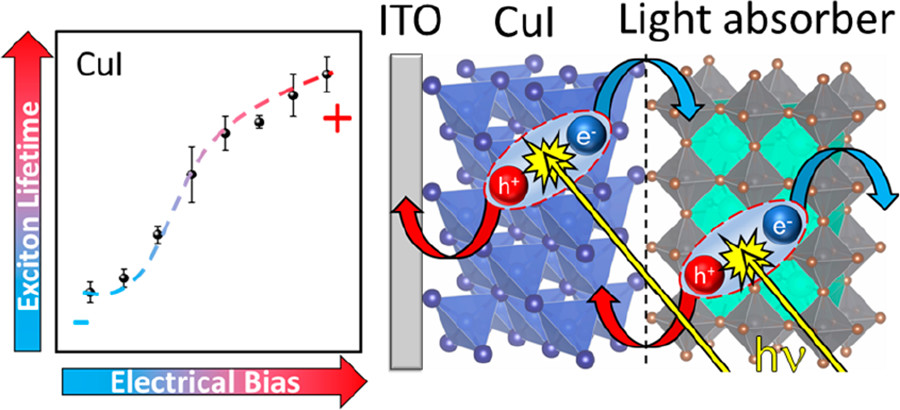
Abstract: Owing to its high hole conductivity and ease of preparation, CuI was among the first inorganic hole-transporting materials that were introduced early on in metal halide perovskite solar cells, but its full potential as a semiconductor material is still to be realized. We have now performed ultrafast spectroelectrochemical experiments on ITO/CuI electrodes to show the effect of applied bias on the excited-state dynamics in CuI. Under operating conditions, the recombination of excitons is dependent on the applied bias, and it can be accelerated by decreasing the potential from +0.6 to −0.1 V vs Ag/AgCl. Prebiasing experiments show the persistent and reversible “memory” effect of electrochemical bias on charge carrier lifetimes. The excitation of CuI in a CuI/CsPbBr3 film provides synergy between both CuI and CsPbBr in dictating the charge separation and recombination.
Transformation of Sintered CsPbBr3 Nanocrystals to Cubic CsPbI3 and Gradient CsPbBrxI3-x through Halide Exchange
Read the latest paper from the Kamat Lab!
Transformation of Sintered CsPbI3 Nanocrystals to Cubic CsPbI3 and Gradient CsPbBrxI3-x through Halide Exchange
Abstract: All-inorganic cesium lead halide (CsPbX3, X = Br-, I-) perovskites could potentially provide comparable photovoltaic performance with enhanced stability compared to organic-inorganic lead halide species. However, small-bandgap cubic CsPbI3 has been difficult to study due to challenges forming CsPbI3 in the cubic phase. Here, a low-temperature procedure to form cubic CsPbI3 has been developed through a halide exchange reaction using films of sintered CsPbBr3 nanocrystals. The reaction was found to be strongly dependent upon temperature, featuring an Arrhenius relationship. Additionally, film thickness played a significant role in determining internal film structure at intermediate reaction times. Thin films (50 nm) showed only a small distribution of CsPbBrxI3-x species, while thicker films (350 nm) exhibited much broader distributions. Furthermore, internal film structure was ordered, featuring a compositional gradient within film. Transient absorption spectroscopy showed the influence of halide exchange on the excited state of the material. In thicker films, charge carriers were rapidly transferred to iodide-rich regions near the film surface within the first several picoseconds after excitation. This ultrafast vectorial charge-transfer process illustrates the potential of utilizing compositional gradients to direct charge flow in perovskite-based photovoltaics.
Thursday, June 23, 2016Posted by Christian Talavera
Tracking Iodide and Bromide Ion Segregation in Mixed Halide Lead Perovskites during Photoirradiation
Read the latest paper from the Kamat Lab!
Tracking Iodide and Bromide Ion Segregation in Mixed Halide Lead Perovskites during Photoirradiation
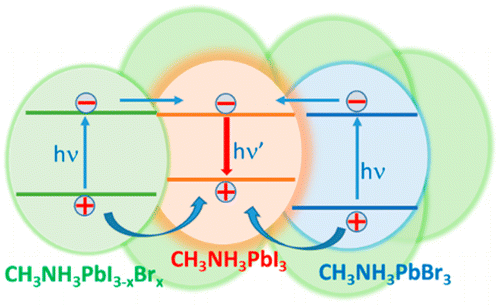
Abstract: Mixed halide lead perovskites (e.g., CH3NH3PbBrxI3-x) undergo phase segregation creating iodide-rich and bromide-rich domains when subjected to visible irradiation. This intriguing aspect of halide ion movement in mixed halide films is now being tracked through excited-state behavior using emission and transient absorption spectroscopy tools. These transient experiments have allowed us to establish the time scale with which such separation occurs under laser irradiation (405 nm, 25 mW/cm2 to 1.7 W/cm2) as well as dark recovery. While the phase separation occurs with a rate constant of 0.1-0.3 s-1, the recovery occurs over a time period of several minutes to an hour. The relative photoluminescence quantum yield observed for Br-rich regions (em. max 530 nm) is nearly 2 orders of magnitude lower than that of I-rich regions (em. max 760 nm) and arises from the fact that I-rich regions serve as sinks for photogenerated charge carriers. Understanding such cascading charge transfer to localized sites could further enable the design of gradient halide structures in mixed halide systems.
Wednesday, June 22, 2016Posted by Christian Talavera
Intriguing Optoelectronic Properties of Metal Halide Perovskites
Read the latest paper from the Kamat Lab!
Intriguing Optoelectronic Properties of Metal Halide Perovskites
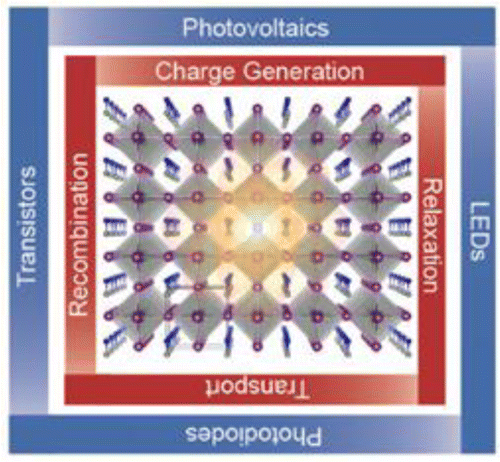
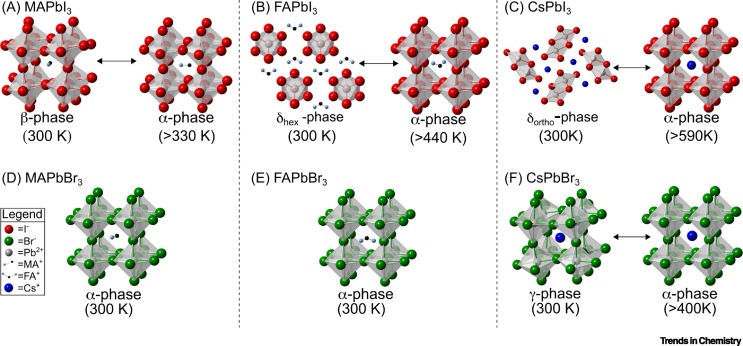
Abstract: A new chapter in the long and distinguished history of perovskites is being written with the breakthrough success of metal halide perovskites (MHPs) as solution-processed photovoltaic (PV) absorbers. The current surge in MHP research has largely arisen out of their rapid progress in PV devices; however, these materials are potentially suitable for a diverse array of optoelectronic applications. Like oxide perovskites, MHPs have ABX3 stoichiometry, where A and B are cations and X is a halide anion. Here, the underlying physical and photophysical properties of inorganic (A = inorganic) and hybrid organic-inorganic (A = organic) MHPs are reviewed with an eye toward their potential application in emerging optoelectronic technologies. Significant attention is given to the prototypical compound methylammonium lead iodide (CH3NH3PbI3) due to the preponderance of experimental and theoretical studies surrounding this material. We also discuss other salient MHP systems, including 2-dimensional compounds, where relevant. More specifically, this review is a critical account of the interrelation between MHP electronic structure, absorption, emission, carrier dynamics and transport, and other relevant photophysical processes that have propelled these materials to the forefront of modern optoelectronics research.















.PNG)